

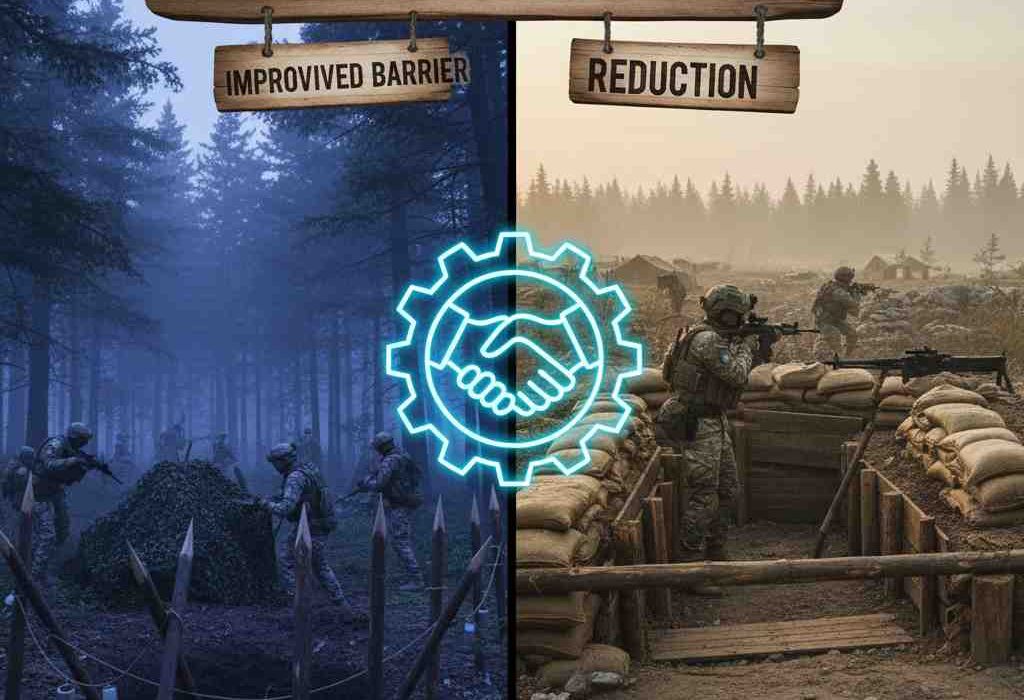
When setting up a short-term defensive position, whether for tactical exercises, survival scenarios, or emergency contingencies, controlling access and visibility is key. Perimeter hardenings don’t need to be permanent or elaborate — they just need to provide early warning, slow unwanted entry, and create options for safe movement.
Why Harden a Perimeter?
Even temporary positions are vulnerable to observation, intrusion, and accidental exposure. A hardened perimeter helps you:
- Delay intruders while your team reacts.
- Gain time for decision-making, extraction, or countermeasures.
- Reduce surprise attacks by channeling movement into controlled paths.
A well-thought perimeter turns a temporary position into a survivable one, giving you control over your environment.
Key Considerations
1. Natural Barriers First
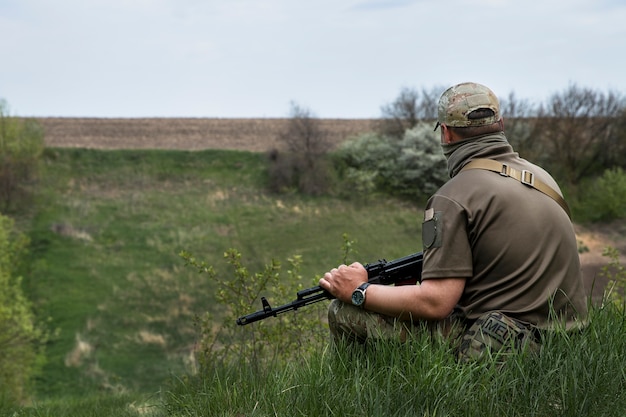
Use existing terrain — trees, fences, rocks, and water features — to funnel movement and block lines of sight. These require no construction but can be highly effective.
2. Temporary Obstacles
Deploy items that slow or deter movement without drawing attention. Lightweight barricades, loose debris, or even stacked containers can create meaningful delay.
3. Observation Points
Ensure you can monitor the perimeter from multiple angles. A high point, even a small mound, allows you to detect threats early and plan responses.
4. Noise and Detection Traps
Simple measures like sticks, stones, or ground arrangements that make unusual noise when disturbed can alert you to approaching intruders. These don’t harm anyone but act as early warning devices.
5. Access Control
Identify limited entry and exit points. Controlling paths simplifies monitoring and makes any intrusion predictable. Even minimal marking or subtle signs can help.
Trade-Offs and Risks
- Time vs. effectiveness: Overbuilding slows you down. For short-term setups, simplicity and speed matter most.
- Visibility: Excessive obstacles can signal presence to observers. Balance concealment and deterrence.
- Maintenance: Temporary barriers can shift or collapse; periodic checks are essential.
Final Thought
Perimeter hardenings for short-term positions are about smart simplicity. Leverage natural terrain, control movement, and create early-warning cues. When done correctly, even a minimalist perimeter gives your team control, enhances safety, and buys crucial time — all without slowing you down or drawing unnecessary attention.