

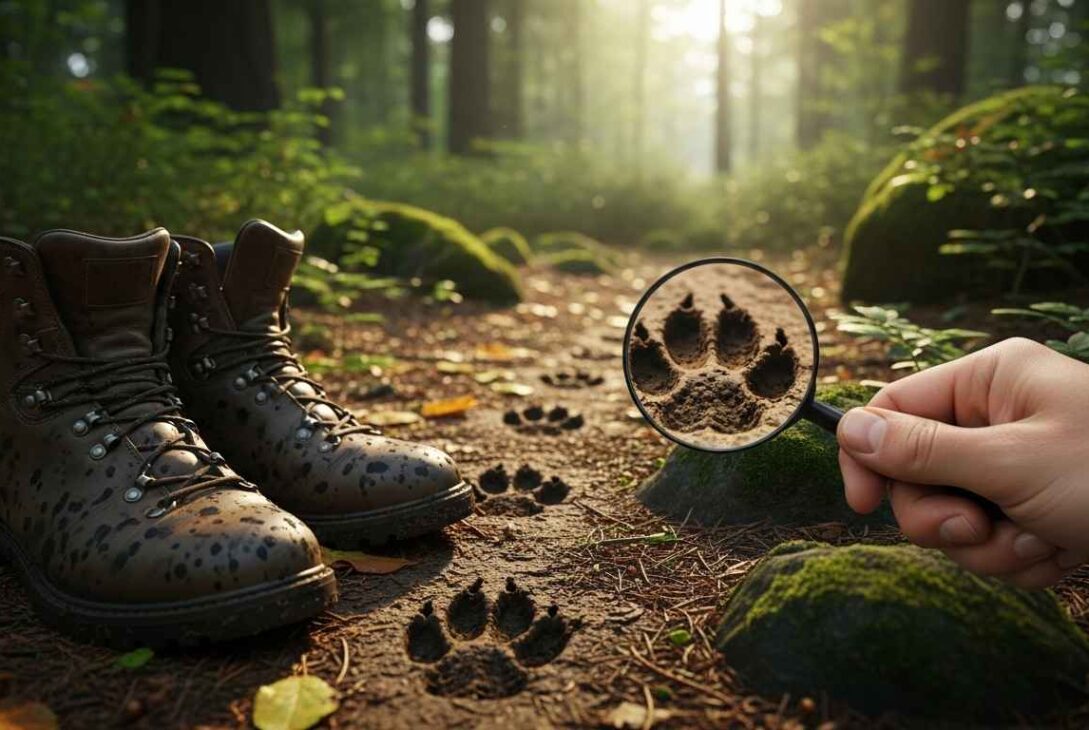
When it comes to survival in the wild, few skills are as valuable—or as underestimated—as tracking. Whether you’re hunting for food, avoiding predators, or trying to find your way back to camp, the ability to read the land and interpret subtle signs can mean the difference between success and struggle. Tracking isn’t just about spotting footprints—it’s about understanding the story nature leaves behind.
1. Reading Footprints and Tracks
Footprints are a tracker’s most obvious clue. Learning to identify the size, shape, and pattern of an animal’s tracks can reveal what species passed through, how fast it was moving, and even whether it was healthy or injured.
A skilled survivalist studies how different surfaces—mud, sand, snow, or leaves—affect the look of a print. You’ll also want to learn how to measure stride and straddle to estimate the animal’s size and speed.
2. Recognizing Trail Signs
Animals leave more than just footprints. Bent grass, broken branches, claw marks on trees, and droppings (known as scat) all tell part of the story. Even faint disturbances in leaf litter or displaced rocks can point to recent movement.
Practice paying attention to patterns. Fresh signs will often be brighter, moister, or sharper-edged, while older ones fade, dry, or crumble with time.
3. Understanding Gait and Behavior
Tracks aren’t just imprints—they’re motion captured in the ground. Different gaits—walking, trotting, bounding, or galloping—show how an animal was moving and what it might have been doing.
For example, a tight, direct line of prints suggests an animal on the move, while wandering, looping trails could indicate foraging or curiosity. Recognizing these patterns helps you predict future movement and make better decisions in hunting or avoidance.
4. Human Tracking for Safety and Rescue
Tracking isn’t just about wildlife. In survival situations, being able to track humans can be just as vital. You may need to find lost companions, identify recent intruders, or follow your own trail back to camp.
Look for signs like crushed grass, disturbed soil, boot prints, and even small fibers or debris. Early morning and late afternoon light can make shadows more visible, helping you detect faint tracks more easily.
5. Reading Environmental Clues
The environment itself often tells a story. A snapped twig may indicate the direction of travel, while displaced dew or frost shows recent movement. Wind, rain, and sunlight can all alter the appearance of tracks, so understanding weather effects helps you judge how old a sign is.
A good tracker also uses their senses—listening for movement, smelling for animal scent, and noting changes in bird calls or insect noise.
6. Developing Situational Awareness
True tracking goes beyond observation—it’s about awareness. A skilled tracker trains their mind to notice subtle changes in the environment that most people overlook.
This heightened awareness keeps you alert to potential threats, helps you locate resources like water or food, and builds a deep connection with your surroundings.
7. Practice and Patience
Tracking is an art that takes time to master. Start small—follow animal prints in soft mud or snow, observe how tracks change over hours or days, and record your findings. The more you practice, the more you’ll start to “see” patterns automatically.
With patience and experience, tracking becomes second nature—an instinct that sharpens your survival edge in any environment.
The Bottom Line
Tracking skills are a cornerstone of wilderness survival. They teach you how to read the land, understand movement, and anticipate danger or opportunity. Whether you’re navigating the wild, hunting for food, or staying one step ahead of threats, mastering tracking means mastering awareness—and that’s a survivalist’s greatest strength.