

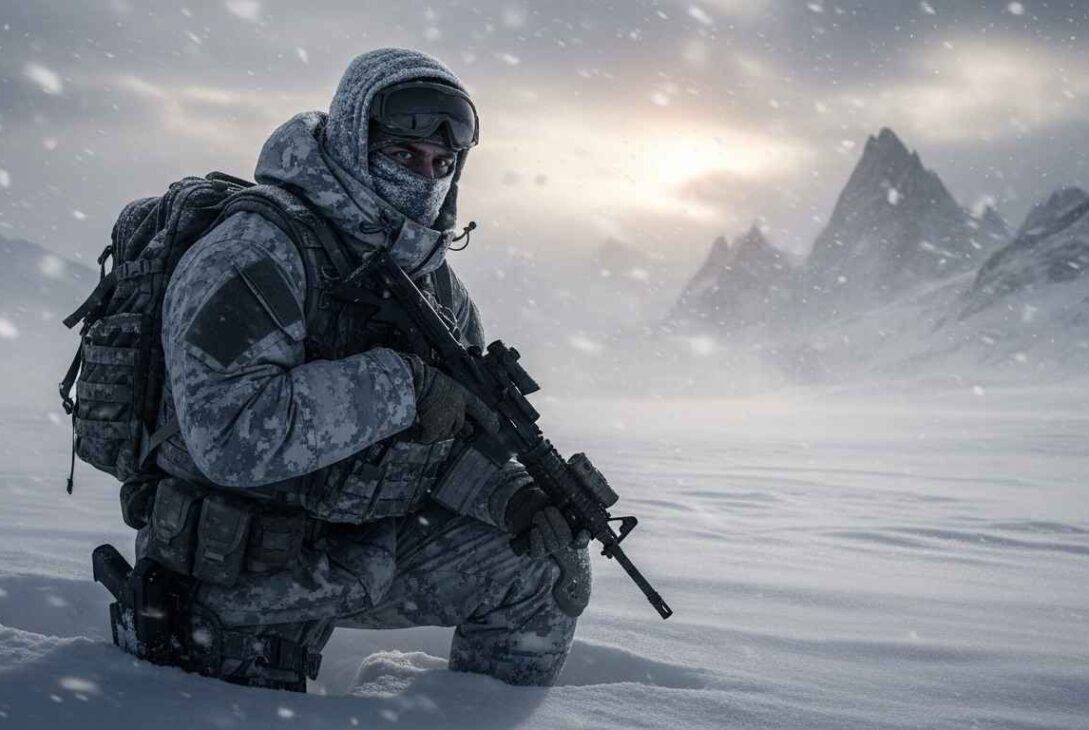
Surviving in extreme cold is about more than layering up—it’s a science. Military operators, survival experts, and outdoor adventurers rely on a combination of gear, tactics, and mindset to stay safe and effective in freezing conditions. Cold weather presents unique challenges: hypothermia, frostbite, dehydration, and decreased mental acuity. Here’s a breakdown of field-tested strategies operators swear by to endure and thrive in harsh winter environments.
1. Layering: The Key to Maintaining Body Heat
Operators know that staying warm is a balance of insulation and breathability. The classic layering system works best:
- Base Layer: Moisture-wicking fabrics like merino wool or synthetic fibers keep sweat off your skin. Wet skin loses heat 20–30 times faster, making this layer critical.
- Insulation Layer: Fleece, down, or synthetic insulation traps body heat without restricting movement.
- Shell Layer: A waterproof, windproof outer layer protects from snow, wind, and rain while allowing moisture to escape.
Tip: Avoid cotton—it traps moisture and accelerates heat loss.
2. Stay Dry: Moisture is Your Enemy
Operators know that wet clothing is dangerous. Even mild sweat can freeze in subzero temperatures. Practical tips include:
- Remove layers during intense activity to prevent sweating.
- Ventilate jackets and boots when possible.
- Use waterproof gloves, gaiters, and shells to protect against snow and slush.
Keeping dry is just as important as keeping warm—it can be the difference between comfort and hypothermia.
3. Protect Extremities: Hands, Feet, and Face
The hands, feet, and face are most vulnerable to frostbite. Operators swear by:
- High-quality insulated gloves or mittens with liners for dexterity.
- Layered socks with moisture-wicking materials and room in boots for circulation.
- Balaclavas, face masks, and goggles to prevent windburn and frostbite.
Constantly check extremities for numbness or color changes—they’re early warning signs.
4. Food and Hydration: Fuel for Warmth
Cold weather increases your energy expenditure—sometimes up to 50% more than usual. Operators rely on:
- High-calorie, nutrient-dense foods like nuts, energy bars, jerky, and chocolate.
- Frequent small meals to maintain a steady metabolism.
- Hydration is often overlooked, but cold air dehydrates you quickly. Warm drinks or insulated bottles can help.
5. Shelter: Building and Using Heat to Your Advantage
Operators use both natural and improvised shelters to conserve body heat:
- Snow caves and lean-tos block wind and trap warm air.
- Emergency bivvy sacks or tarps are lightweight and effective for field use.
- Insulation from the ground is crucial. Use sleeping pads, pine boughs, or clothing layers to avoid heat loss.
Even a few minutes of careful shelter preparation can dramatically improve survival odds.
6. Movement and Activity
Operators know that staying active prevents hypothermia, but overexertion can be dangerous:
- Keep moving to maintain circulation. Small exercises like jumping jacks or arm swings can generate heat.
- Avoid sweating. Overheating in heavy layers leads to wet clothing, which accelerates heat loss.
- Rotate tasks with your group to maintain warmth without exhaustion.
7. Mental Preparedness: Staying Calm Saves Lives
Cold-weather survival isn’t just physical—it’s mental. Operators emphasize:
- Focus on priorities: warmth, hydration, food, and shelter.
- Stay positive: Panic drains energy and impairs decision-making.
- Plan ahead: Knowledge of terrain, weather forecasts, and exit routes reduces risk.
Even experienced adventurers can succumb if they lose mental focus.
8. Tools and Gear Operators Swear By
Certain tools are non-negotiable in freezing conditions:
- Multi-tool or survival knife: useful for cutting, fire-making, and shelter building.
- Fire-starting kit: waterproof matches, lighters, or ferrocerium rods.
- Portable stove or insulated thermos: warm liquids boost core temperature.
- Thermal blankets or emergency bivvies: lightweight but heat-retaining.
Conclusion
Cold weather survival requires preparation, knowledge, and adaptability. Operators understand that layering, staying dry, protecting extremities, eating well, maintaining shelter, and mental focus are critical for enduring harsh winter conditions. By adopting these field-tested techniques, anyone venturing into freezing environments can increase safety, performance, and confidence.
Remember, in extreme cold, it’s not about brute strength—it’s about strategy, discipline, and smart gear choices. Master these techniques, and you’ll stay warm, alert, and ready for anything the winter throws your way.